
Share this content :
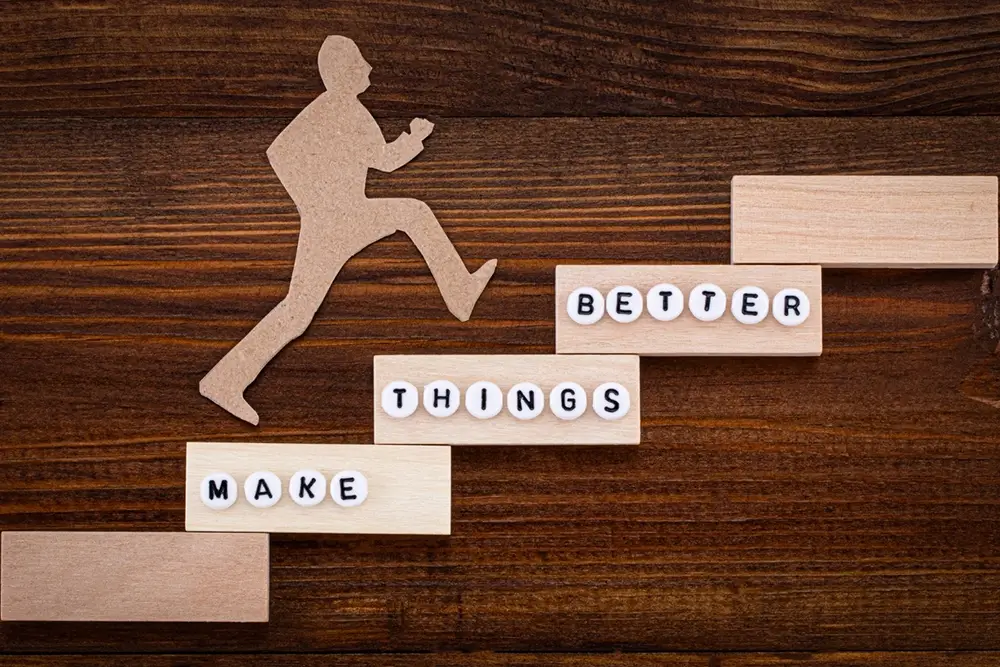
Most people ask “how to improve yourself,” and yet fewer are willing to do what it requires.
Growth doesn’t start from books, seminars, or another podcast playing in the background while you scroll. Real improvement shows up in what you do when nobody is watching. It’s in the habits you build, the skills you sharpen, and the way you choose to spend your time when it’s yours to control.
If you’re serious about figuring out how to improve yourself, you need to look beyond the obvious. One of the most overlooked tools? Hobbies and creative work.
Look at how most people spend their time outside of work. They consume. They scroll. They watch. They react.
There’s no creation. No skill-building. No intentional effort to get better.
That’s the gap.
People think they’re resting, but they’re actually staying the same. There’s a difference between recovery and avoidance. One prepares you. The other delays growth.
If you’re serious about how to improve yourself, you need to look at what you do in your free time. Engaging in meaningful activities outside of work improves overall well-being and performance (APA, 2020). The keyword there is meaningful. That’s where you amp up your trajectory.
There’s a mindset out there that says if it doesn’t make money, it’s not worth doing. That will burn you out faster than anything. Hobbies are not the opposite of productivity. They’re fuel for it.
When you’re asking how to improve yourself, understand this: your brain needs different environments to grow. Employees who regularly engage in creative hobbies perform better at work because they develop problem-solving skills and mental flexibility (Eschleman et al., 2014). If you only operate in one lane, your thinking becomes narrow.
Take note: hobbies open up lanes you didn’t know existed.
Hobbies and creativity aren’t just side activities you squeeze in when everything else is done. They are active tools for shaping how you think, handle pressure, and respond to challenges. Below is a list of how these matter when learning how to improve yourself:
Discipline is built in repetition. Hobbies give you a space to practice that repetition without pressure. No deadlines. No boss. No immediate consequences if you skip.
When you show up to a hobby consistently, that’s because you chose to. That choice builds a stronger form of discipline than obligation ever will. In fact, engagement in creative activities strengthens persistence and resilience over time (Forgeard, 2013). And once that habit locks in, it carries over.
You become more consistent at work. More structured with your time. More reliable with your commitments. If you’re trying to figure out how to improve yourself, understand this: discipline starts where it’s optional.
A lot of people treat creativity like it’s only for artists. That’s wrong.
Creativity is problem-solving. It’s the ability to adapt, to think differently, to see opportunities others miss. If you’re building a business, managing money, leading people, or wanting to know how to improve yourself, you need that skill.
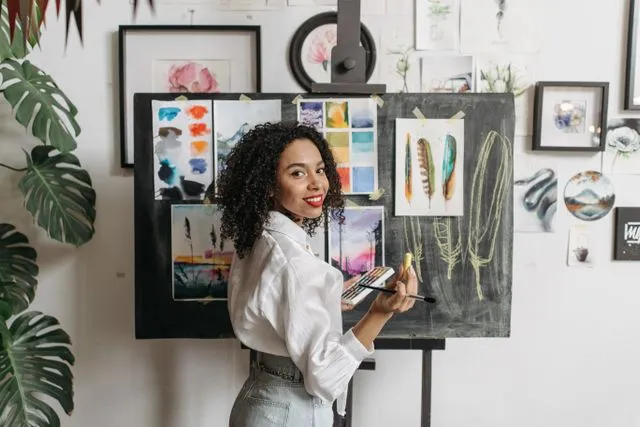
From Pavel Danilyuk on Pexels.
Creative activities engage multiple areas of the brain, improving cognitive flexibility and decision-making (Harvard Health Publishing, 2018). This forces you to produce, not just consume. If you want to know the edge on how to improve yourself, you need to build your thinking ability.
You don’t become good at anything overnight. When you’re learning something new or starting an activity, knowing how to improve yourself can slow your progress. You don’t get immediate rewards. Only small improvements over time. That process teaches patience to respect the timeline of growth. To understand that getting better takes repetition, not shortcuts.
“Grit” is the combination of passion and perseverance over time (Duckworth, 2016). You don’t build that in high-pressure situations—you build it in the small things you choose to keep showing up for. Hobbies are one of the simplest ways to develop that trait. If you can stay consistent in something that doesn’t pay you, you can stay consistent in something that does.
That’s a direct path in how to improve yourself.
Pressure is part of life. The question is how you handle it.
Without an outlet, stress builds. It affects your decisions, focus, and behavior. Hobbies give you a controlled space to reset. Engaging in leisure activities lowers cortisol levels (National Institutes of Health, 2019). Hobbies require attention, which pulls you out of stress loops. They create structure, which stabilizes your thinking.
If your mind is unstable, your actions will be inconsistent, and your results will be unpredictable. Learning how to improve yourself includes learning how to control your state. And hobbies help you do that.
Confidence isn’t something you talk yourself into. It’s something you build.
When you start a hobby, you’re not immediately great at it. That’s normal. Self-efficacy is built through mastery experiences. You do something, you improve, and you start believing in your ability to succeed (Bandura, 1997). This is how to improve yourself.
The longer you stay consistent with something, the more it becomes part of who you are. You don’t just “do” the hobby. You become someone who trains, creates, or builds.
It changes how you see yourself, what you expect of yourself, and how others perceive you. Growth is reflected in your identity, which is central to answering the question of how to improve yourself.
Hobbies and creativity shape it from within. If you’re looking at how to improve yourself, this is one of the clearest reminders that growth shows up in the things you consistently choose to build when there’s nothing demanding it from you.
Not every hobby will push you forward. Some can be distractions. Others are just for entertainment. A useful hobby should make you learn something, force you to build skills, and give you clear signs that you’re getting better over time. They should help you answer: how to improve yourself?
It should require focus and effort, not just attention and presence. Here are samples:
If you want to know how to improve yourself, choose hobbies that demand something of you.
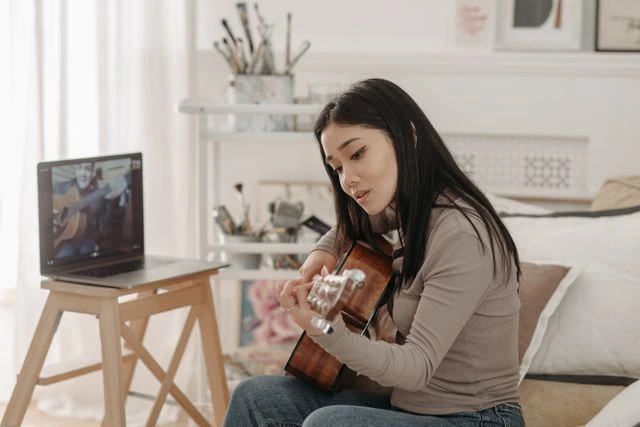
From Pavel Danilyuk on Pexels.
Most people overthink the beginning. They don’t move unless they think it’s the right time, they have the right setup, or they’re at the right skill level. That’s not how hobbies and the practice of creativity work.
In knowing how to improve yourself, you should start where you are. Here’s a simple framework you can adapt:
No constant switching or chasing motivation. Just consistency.
The biggest improvements happen in the hours no one sees, work no one tracks, and effort no one praises. That’s where hobbies and creativity live. This is where you build your identity.
Most people ignore them because they don’t seem urgent or look silly. But if you’re serious about how to improve yourself, you need to focus on what compounds over time, not what feels important in the moment. Let the results speak later.
The answers on how to improve yourself can be found here.
Key Takeaways
American Psychological Association. (2020). Stress in America™ 2020: Stress in the time of COVID-19. https://www.apa.org/news/press/releases/stress/2020/report
Bandura, A. (1997). Self-efficacy: The exercise of control. W. H. Freeman and Company. https://psycnet.apa.org/record/1997-08589-000
Duckworth, A. L. (2016). Grit: The power of passion and perseverance. Scribner. https://www.simonandschuster.com/books/Grit/Angela-Duckworth/9781501111105
Eschleman, K. J., Madsen, J., Alarcon, G., & Barelka, A. (2014). Benefiting from creative activity: The positive relationships between creative activity, recovery experiences, and performance-related outcomes. Journal of Occupational and Organizational Psychology. https://phys.org/news/2014-04-creative-job.pdf
Forgeard, M. J. C. (2013). Perceiving benefits after adversity: The relationship between self-reported posttraumatic growth and creativity. Psychology of Aesthetics, Creativity, and the Arts, 7(3), 245–264. https://doi.org/10.1037/a0032285
Harvard Health Publishing. (2018). The health benefits of creativity. Harvard Medical School. https://www.health.harvard.edu/blog/the-health-benefits-of-creativity-2018041113613
National Institutes of Health. (2019). Relaxation techniques: What you need to know. National Center for Complementary and Integrative Health. https://www.nccih.nih.gov/health/relaxation-techniques-what-you-need-to-know
Share this content :